Workout program review
Workout Program Review Checklist
Use this checklist to audit any strength training plan before you spend weeks on it. A good program matches your goal, gives enough recoverable work, and makes the next progression decision obvious.
Contents
Workout program review contents
Scorecard
The 9-point workout program review checklist
A good workout program is not just a hard list of exercises. It should give you enough useful training to progress while still letting you recover. Score one point for each item your plan clearly has.
- Goal clarity: the plan says whether it is for strength, muscle growth, general fitness, or a specific weak point.
- Realistic schedule: the number of training days fits your calendar, sleep, and recovery.
- Exercise selection: each exercise has a job, not just a popular name.
- Movement balance: pushing, pulling, squatting, hinging, arms, delts, calves, and trunk work match the goal.
- Weekly hard sets: most muscles land in a useful weekly range for your training level — begin conservative (beginners and intermediates often start lower) and ramp toward roughly 10-20 hard sets per muscle per week for hypertrophy as recovery allows.
- Effort target: the plan uses RPE, RIR, or clear stop rules so every set is not a max test.
- Progression rule: you know when to add reps, load, sets, or repeat the same work.
- Recovery plan: rest days, easier weeks, and deload triggers are built in.
- Tracking method: sets, reps, load, effort, and recovery are recorded so changes are based on evidence.
Score result
How to score your workout plan
| Score | Verdict | What to do next |
|---|---|---|
| 0-3 | Needs fixing | Do not add more work yet. Add a goal, movement balance, progression rule, and recovery structure first. |
| 4-6 | Usable but incomplete | Run it only after you fix the missing pieces. The most common gaps are progression, weekly volume, and pulling or leg work. |
| 7-9 | Solid starting point | Run it for at least 4-8 consistent weeks before judging it, unless pain, extreme fatigue, or obvious imbalance shows up sooner. |
Split check
Apply the checklist to common workout splits
| Split | Usually good when | Common problem |
|---|---|---|
| Full body | You train 2-4 days, keep each session moderate, and repeat key lifts often enough to improve. | Trying to train every muscle hard every session until workouts get too long. |
| Upper/lower | You train 3-4 days and spread upper and lower volume across the week. | Lower days become overloaded with squats, deadlifts, and too much accessory volume. |
| Push pull legs | You can recover from 5-6 days and keep push, pull, and leg volume balanced. | A 3-day PPL may train each muscle only once weekly, which is often less efficient for beginners. |
| Bro split | You are experienced enough to create high-quality work for one muscle focus per session. | Once-weekly frequency and too much junk volume for a single muscle. |
| PPLUL | You want a realistic 5-day hybrid with both focused days and repeated upper/lower exposure. | The second upper/lower pass duplicates fatigue instead of filling gaps. |
Red flags
Signs your workout program needs changes
- You cannot explain what each day is supposed to improve.
- There is no progression rule beyond trying harder.
- Every set is near failure, including heavy compound lifts.
- Back, legs, hamstrings, rear delts, calves, or trunk work are missing.
- Weekly volume jumps even when performance and recovery are getting worse.
- Exercises change so often that you cannot compare results.
- The plan requires more days or time than you can realistically sustain.
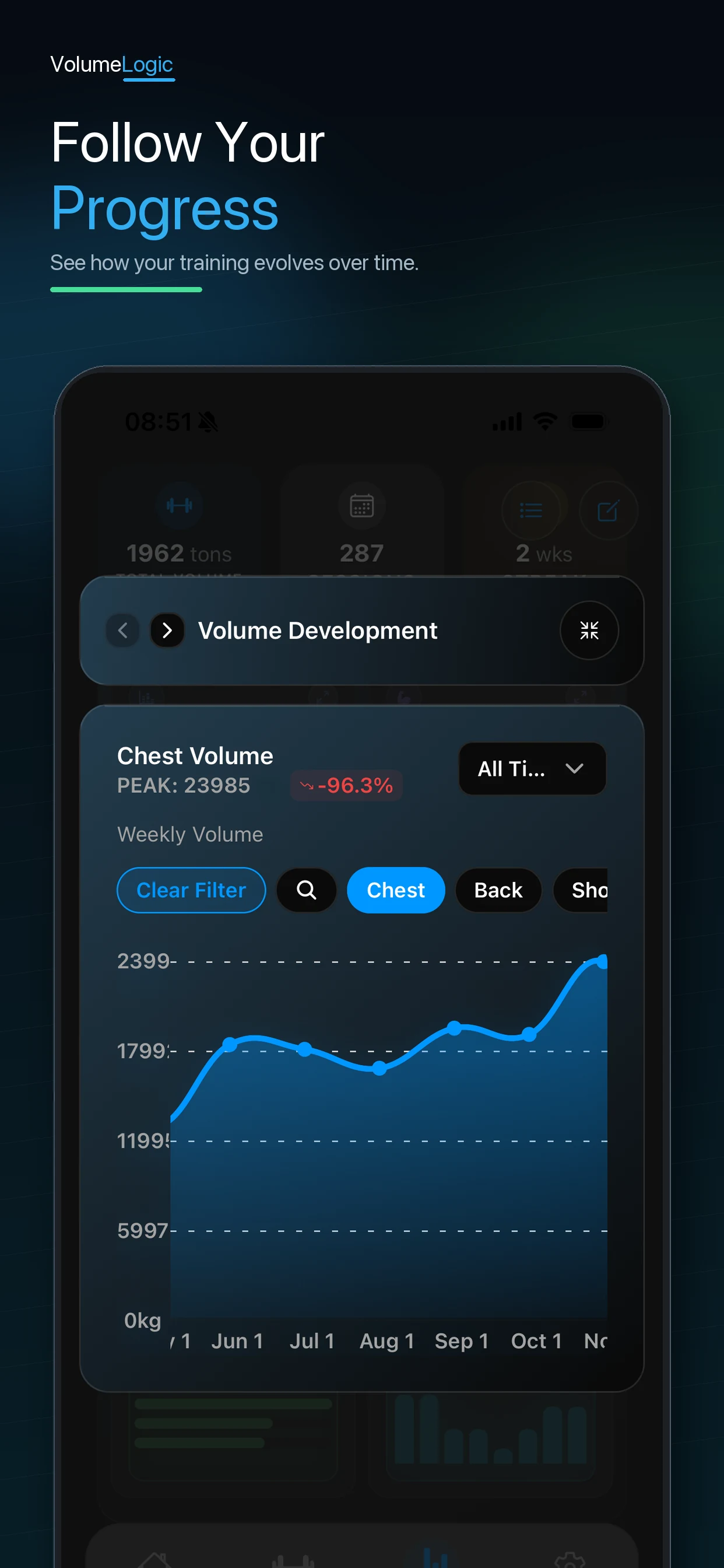
Use the training volume calculator to check weekly hard sets and the training volume tracker guide to review trends over several weeks.
Next step
Use the level-specific checks
FAQ
Workout program review FAQ
How do I know if a workout program is good?
A good workout program matches your goal, trains the major muscles or lifts enough to progress, includes a clear progression rule, manages recovery, and gives you data to review over several weeks.
What are the biggest red flags in a workout program?
The biggest red flags are no progression plan, missing muscle groups, too much failure training, no rest or deload logic, random exercise changes, and weekly volume that rises while performance falls.
How long should I test a workout program before changing it?
Most lifters should run a reasonable program for at least 4-8 consistent weeks before judging it, unless pain, extreme fatigue, or obvious imbalance shows up sooner.
Is soreness a sign of a good workout?
Soreness can happen, but it is not proof that a workout is good. Performance, recovery, consistency, and progression matter more.
Should beginners and advanced lifters use the same checklist?
They can use the same principles, but the standards differ. Beginners need simplicity and practice, while advanced lifters need more fatigue management and phase planning.