VolumeLogic
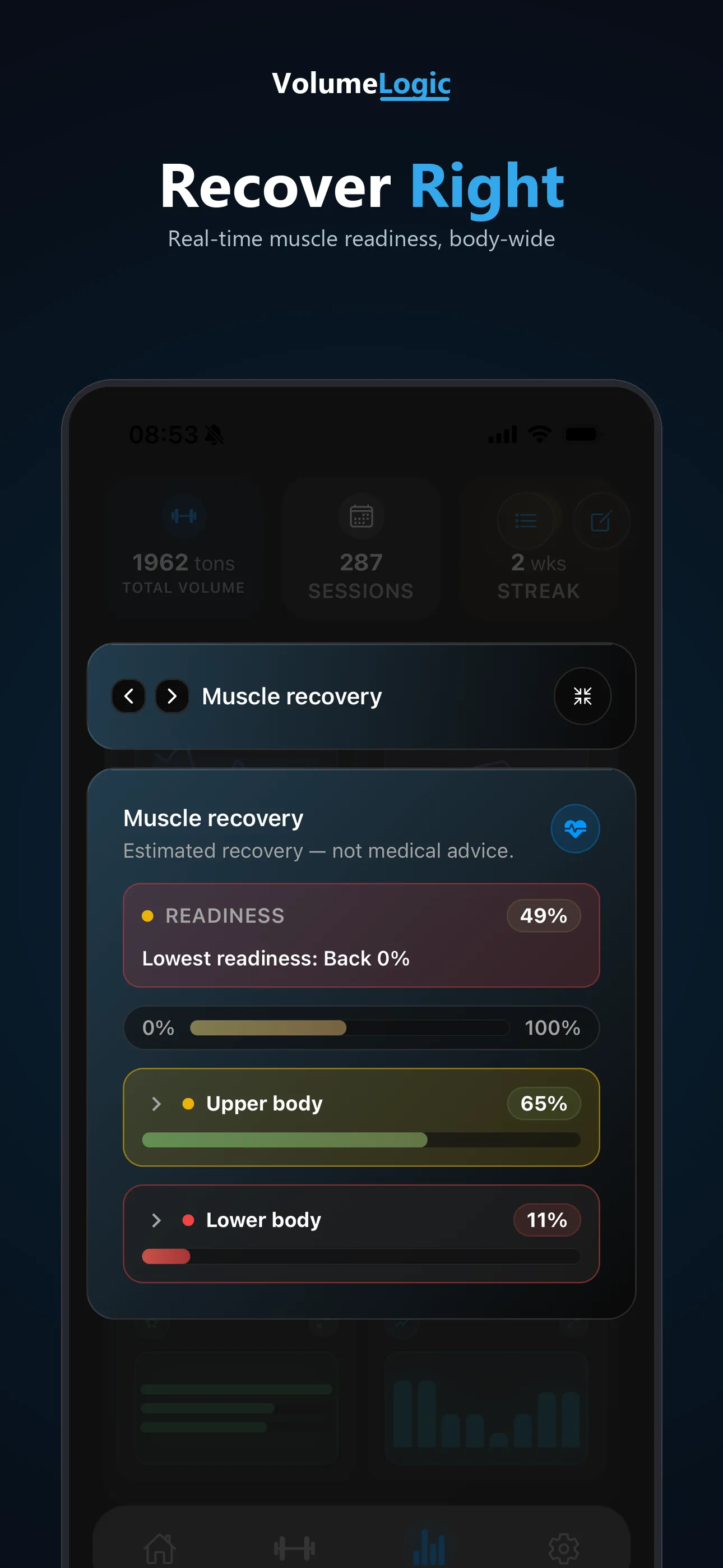
VolumeLogic is more opinionated around your own training data: unlimited templates, fast logging, RPE, weekly workload, muscle recovery, plateau signals, deload context, and adaptive recommendations.
Workout app comparison
Boostcamp is strongest when you want to discover and run proven programs. VolumeLogic is strongest when you already train seriously and want your own logged history to drive volume, recovery, and progression decisions.
Quick verdict
VolumeLogic is more opinionated around your own training data: unlimited templates, fast logging, RPE, weekly workload, muscle recovery, plateau signals, deload context, and adaptive recommendations.
Boostcamp emphasizes a large free program library, coach-designed programs, community programs, tracking, RPE/RIR fields, plate calculators, PRs, reports, and Pro analytics such as strength scores and volume heatmaps.
Feature-by-feature
| Feature | VolumeLogic | Boostcamp |
|---|---|---|
| Fast workout logging | Yes | Yes |
| Large public program library | No | Yes |
| Unlimited custom templates in free tier | Yes | Partial |
| RPE logging | Yes | Yes |
| Weekly training volume as a primary signal | Yes | Partial |
| Per-muscle recovery and readiness signals | Yes | No |
| Plateau detection and deload suggestions | Yes | No |
| Automatic workout generator | Yes | Partial |
| Built for your own templates and history | Yes | Partial |
Comparison is based on public website and store-listing positioning available when this page was updated. "Partial" means the app has a related feature, but it is not positioned the same way or is limited by tier or workflow.
Key difference
Boostcamp helps you find a program. Boostcamp is built around discovering and running coach-designed or community programs when you want a structured plan ready to go.
VolumeLogic helps you manage the training stress from any program. VolumeLogic assumes you already have a split or program and focuses on whether weekly volume, RPE, and per-muscle recovery support sustainable progress.
Switch to VolumeLogic if
Stick with Boostcamp if
Why VolumeLogic converts logged sets into decisions
VolumeLogic tracks sets, reps, weight, RPE, rest time, workout history, templates, cardio, and summaries. Then Pro analytics turn that history into volume tracking, muscle group distribution, progression guidance, readiness signals, plateau detection, and deload suggestions.
Alternative proof
You do not have to choose between having a plan and managing fatigue. VolumeLogic is built for lifters who already know what they are running and need better feedback on the stress that program creates.
Next step
Download VolumeLogic free, recreate your current split as templates, and see how volume and recovery respond week to week.
FAQ
It depends on the job. Boostcamp is better if you mainly want a large program library. VolumeLogic is better if you want a custom workout tracker that turns your own volume, RPE, recovery, and performance history into training decisions.
Yes. VolumeLogic works well when you already know your split or program and want to log it with unlimited templates, then analyze workload, readiness, and progression over time.
No. VolumeLogic does not center a public program marketplace. It includes templates, workout generation, and analytics built around the training you log.
Weekly volume, per-muscle workload, RPE, and recovery readiness show when a program is productive versus when it is accumulating fatigue—so you can adjust sets, exercises, or deload timing without guessing.
Yes. RPE logging, weekly workload trends, and per-muscle analytics work with any template you build—whether you wrote the program yourself or adapted one from elsewhere.
Try VolumeLogic
The core workout tracker is free on iOS and Android. Upgrade only when you want deeper analytics, recovery insights, coaching recommendations, cloud sync, customization, and automatic workout generation.